
Using AI to transform
the hiring conversation
Context
Hiring great designers is one of the highest‑leverage things I do as a design leader — but it’s also one of the most time‑consuming.
Across hiring loops I noticed the same pattern:
I was asking the same questions repeatedly.
Candidates were asking the same questions repeatedly.
Interviews often spent the first 15–20 minutes establishing context before deeper conversations could begin.
For both sides, valuable time was spent on information exchange rather than meaningful discussion. At the same time, I wanted to build hands‑on experience with modern AI systems and tools like Figma Make.
This created an opportunity:
Could I redesign the hiring conversation itself using AI?
Insight
Instead of candidates interviewing me only after scheduling a call… What if they could “interview me” anytime?
What if candidates could explore:
How I think about design.
How I evaluate product decisions.
How I lead teams.
How Step builds products.
— before we ever spoke live?
This led to a simple hypothesis:
If I could build an AI trained on my work, experience, and thinking, it could act as a scalable version of me in early hiring conversations.
Hypothesis
An AI assistant trained on my resume, writing, and case studies could:
Answer common candidate questions instantly.
Give candidates deeper insight into how I think and work.
Reduce repetitive interview time.
Improve candidate alignment before interviews begin.
Turn hiring conversations from information transfer into meaningful discussion.
Solution
I built a custom GPT‑powered chatbot trained on:
My resume
Design case studies
Leadership philosophy
Past writing and documentation
Product work and decision frameworks
The bot allows candidates to ask questions such as:
How do you evaluate designers during interviews?
What was the hardest design problem you solved at Step?
What do you value in product designers?
How do you balance design quality with business goals?
Instead of static portfolio pages, candidates can have a conversation with my experience.
Process
Phase 1 — Rapid Exploration
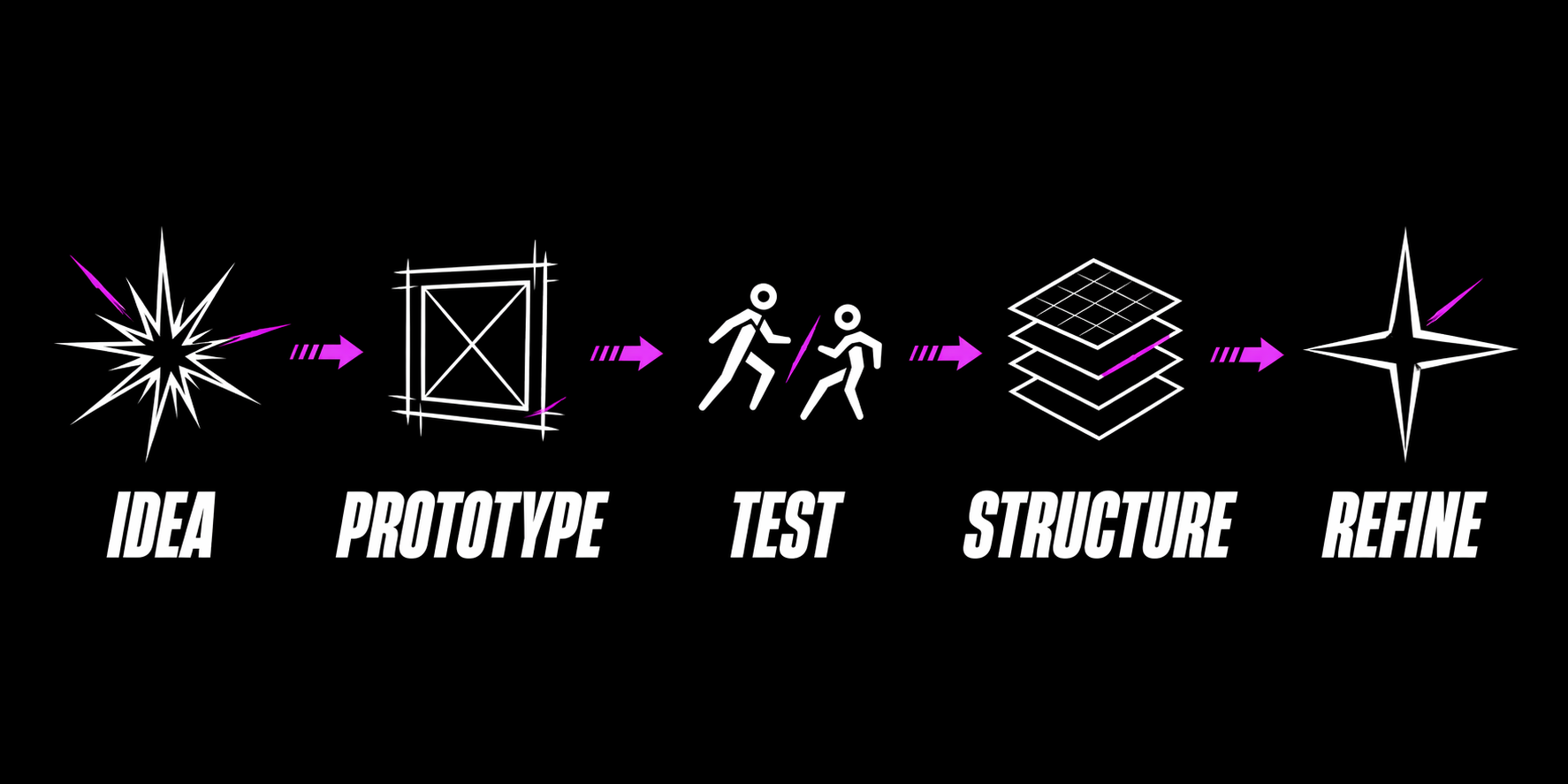
I intentionally started scrappy. Using basic tooling and LLM APIs, I quickly “vibe coded” a prototype to test whether the idea was interesting before investing heavily in architecture. The goal was speed of learning, not technical perfection.
Phase 2 — Early Testing
I shared the prototype with:
Designers
Peers (other hiring managers)
Potential candidates
Recruiters
Observing:
What questions people asked
Where the AI failed
Where responses felt surprisingly valuable
One thing became immediately clear:
The quality of answers depended far more on structured inputs than on the model itself.
Phase 4 — Prompt & Response Design
Prompt design became the core product layer.
I iterated on:
Structured prompts
Response tone and voice
Contextual grounding
Hallucination reduction
Phase 3 — Building the Knowledge System
The next step was transforming raw experience into structured context. I built a knowledge base including:
Structured case studies
Resume data
Team documentation
Written work on leadership philosophy
Product decision frameworks
Past writing
This evolved into a lightweight RAG-style system where the AI could reference relevant context dynamically.
Phase 4 — Prompt & Response Design
Prompt design became the core product layer.
I iterated on:
Structured prompts
Response tone and voice
Contextual grounding
Hallucination reduction
I frequently used AI itself to optimize prompts, code, and knowledge formatting. The UI remained intentionally minimal — prioritizing conversation over interface complexity.
Key Design Decisions
Start messy on purpose I optimized for learning speed rather than technical correctness.
Treat prompts as product Prompt architecture became the primary UX layer.
Invest in knowledge design Structuring experience into usable data unlocked the biggest improvements.
Keep the cost of failure low The project restarted multiple times with minimal friction.
Impact
While still an experimental project, the tool already created measurable benefits:
Reduced repetitive interview questions
Candidates entered conversations with stronger context
Interviews shifted toward higher‑level discussion
I gained hands‑on experience building AI systems
More importantly, it reframed how I think about knowledge and expertise. Instead of experience living only inside a person’s head, it can become an interactive system others learn from.
Why This Matters
For design leaders, time is the most limited resource. AI systems like this allow leaders to:
Scale knowledge
Reduce repetitive communication
Improve hiring quality
Focus conversations on real signal instead of context building
In many ways, this project was less about chatbots and more about a new
question:
What happens when your experience becomes a product?
Future Exploration
Possible next steps include:
Integrating the bot into hiring funnels
Tailoring responses based on role or seniority
Expanding the system into mentorship and design education
Applying similar systems to internal design knowledge sharing
The long‑term opportunity is clear: